Melatone Skin Clinic
Home Skin of Colour Journal About Contact

PRP · London · Battersea

Your own biology, concentrated.

Platelet-rich plasma uses growth factors from your own blood to stimulate hair follicle activity and skin tissue repair. No synthetic filler, no foreign substance, no allergy risk. Evidence is strongest for early-stage androgenetic alopecia, post-pregnancy hair shedding, and facial skin quality.

★ 5.0 Google · 40 reviews · Single sessions from £295 · Course of 3 from £795 · Delivered by Arman Zaki · Battersea, London SW11
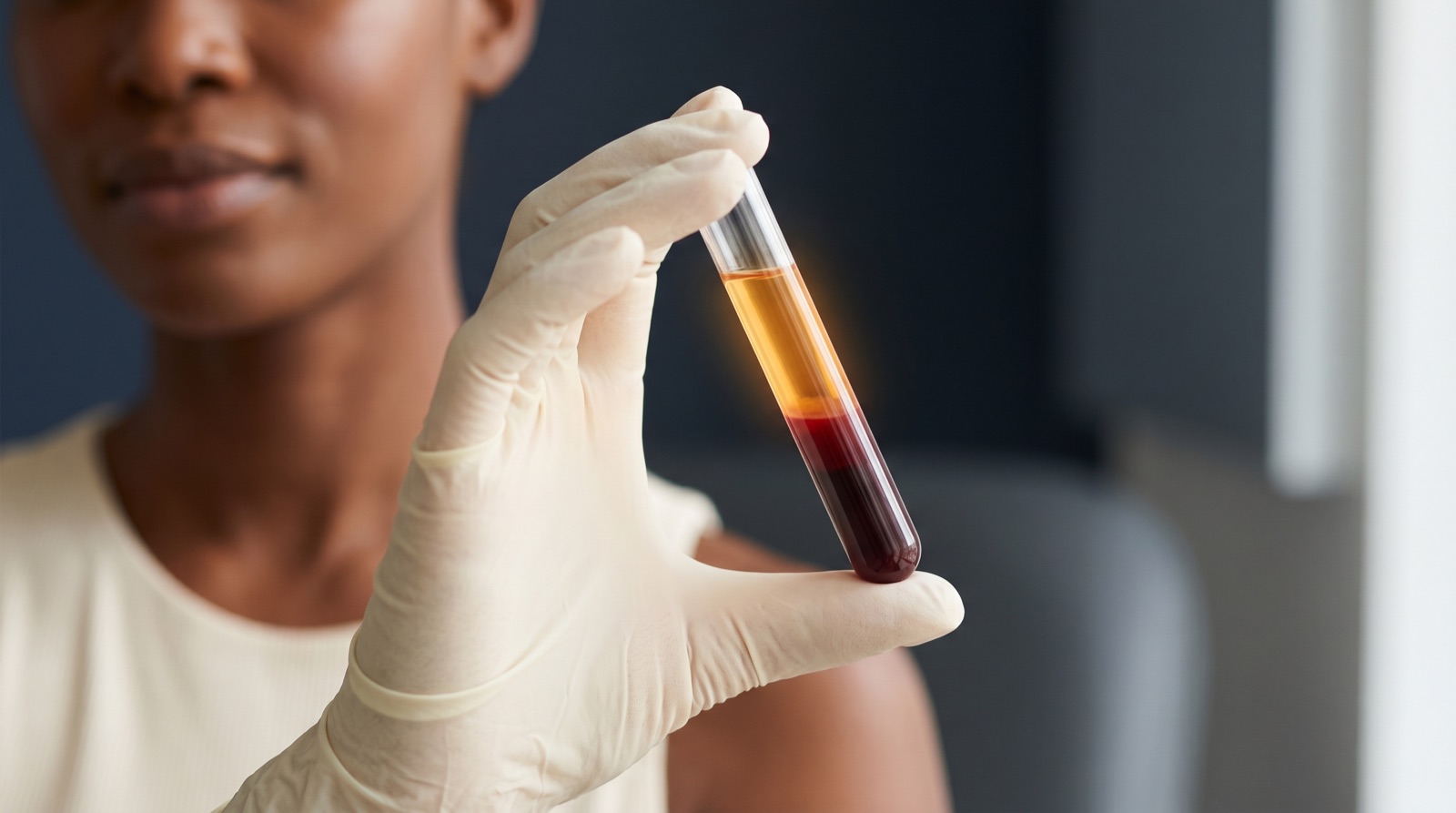
Centrifuged platelet-rich plasma, the golden plasma layer separated from red blood cells, prepared from your own blood at Melatone Skin Clinic Battersea. Illustrative.

What PRP is, what it isn't

A biological treatment, not a cosmetic fix.

PRP is not filler. There is no volume added. What you get is the growth-factor signal: your platelets, concentrated, delivered into a zone where you want repair (scalp follicles, facial dermis). The biology does the work over the following weeks.

This is also why PRP works as a course, not a single session. The signal needs to be repeated for the follicle or fibroblast response to compound. One session can show changes, but the published evidence base sits on 3 to 4 sessions for a meaningful response. The PRP regenerative-aesthetics evidence base is indexed on PubMed; specialist sources include the Journal of Regenerative Aesthetic Medicine (JRAM) and the Journal of Aesthetic and Regenerative Medicine (JARM).

A client and a Melatone clinician, both with rich Fitzpatrick V to VI skin, sharing a relaxed moment in the cream and champagne consulting room at our Battersea clinic. Illustrative.
One unhurried appointment with Arman Zaki, where your consultation comes before anything else. The blood draw and treatment are done by the same practitioner, start to finish. Illustrative of our consulting room and care, not a depiction of PRP treatment or its results. Suitable for adults 18 and over.

Mechanism

Blood draw to growth-factor delivery, in one appointment.

We take a small blood sample, similar in volume to a standard blood test. The sample is centrifuged in a sterile separator, which spins the heavier red blood cells to the bottom and concentrates platelets in the plasma fraction. The platelet-rich fraction is drawn off and prepared for injection.

For hair restoration, the PRP is injected into the scalp at the follicle level across the treatment zone. For facial PRP, it's injected superficially into the dermis or applied topically with microneedling for absorption through micro-channels.

Platelets release growth factors (PDGF, TGF-β, VEGF) that signal tissue to repair. In hair follicles, this may extend the anagen growth phase. In skin, it may upregulate collagen synthesis and fibroblast activity.

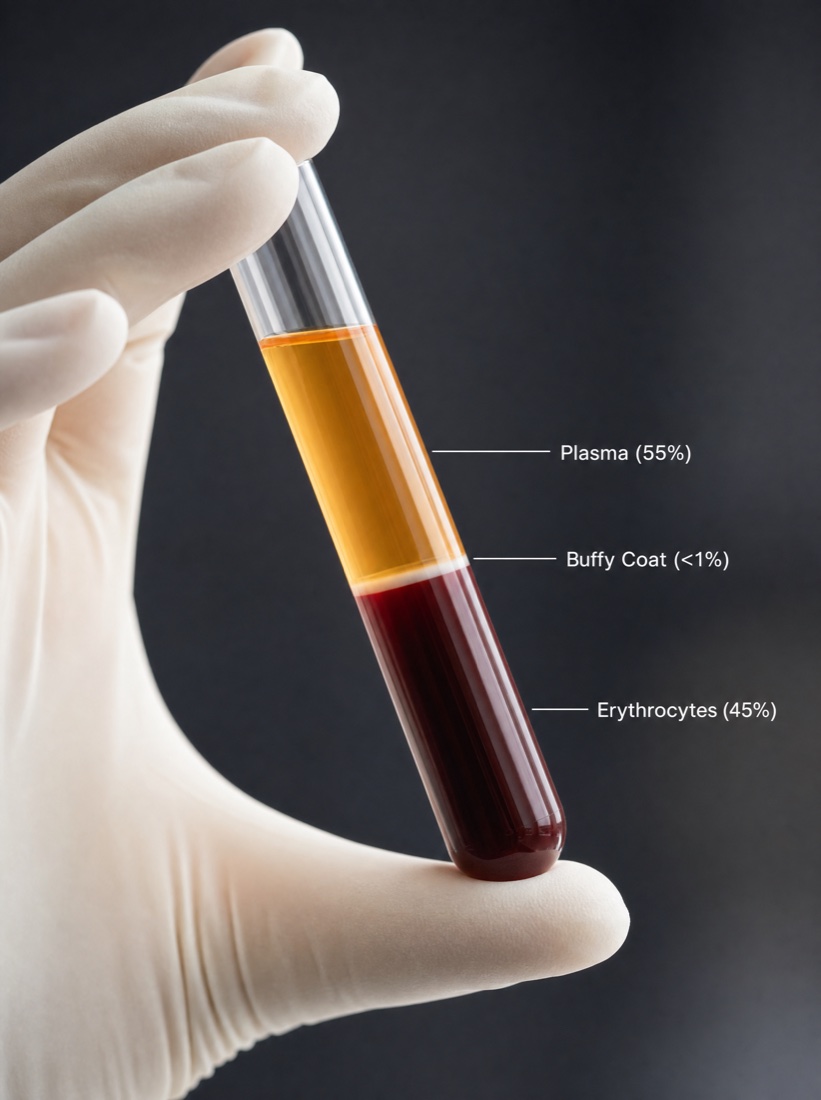
A centrifuged blood sample separated into layers: plasma about 55 percent, a thin buffy coat under 1 percent, and erythrocytes about 45 percent, held in a gloved hand
After the spin, blood separates into plasma (about 55 percent), a thin buffy coat (under 1 percent, the platelet-rich layer) and red cells (about 45 percent). The platelet-rich fraction is what we draw off. Illustrative.

What we treat

When PRP is the right answer

Androgenetic alopecia (early to moderate stage)

Strongest evidence base. Course of 3 to 4 sessions, then maintenance. Often combined with topical minoxidil.

Telogen effluvium and post-pregnancy hair shedding

PRP may shorten the recovery window. Course of 3 sessions, then assess.

Beard density

Patchy beard growth in suitable candidates. Evidence smaller but consistent.

Facial skin quality

Periorbital ageing, fine lines, skin tone. Often paired with microneedling for absorption.

Combination with polynucleotides or microneedling

Layered regenerative protocols where the published evidence supports the combination.

PRP microneedling · Vampire facial

Not a facial. Regenerative skin therapy, powered by your own plasma.

PRP microneedling, widely known as a vampire facial, is microneedling paired with topical PRP from your own blood. We take a small blood sample, concentrate the platelet-rich plasma in a medical centrifuge, then infuse that growth-factor-rich plasma through fresh micro-channels created by microneedling, with any leftover plasma optionally placed along set lines. Where filler adds volume from the outside, this supports your skin from within, and may improve the appearance of fine lines, texture and overall radiance. It is delivered by Arman Zaki, GMC-registered Physician Associate, who performs the blood draw and the treatment himself. Results build over a course, and individual results vary.

Centrifuged platelet-rich plasma, the golden plasma layer separated from red blood cells, beside calm Fitzpatrick V to VI skin, at Melatone Skin Clinic Battersea
After the spin, your blood separates into the golden, platelet-rich layer we infuse through the micro-channels. Illustrative; your own plasma is prepared fresh on the day.
How it works: your blood is spun to concentrate the golden, platelet-rich plasma, which is infused through the microneedling micro-channels where your own growth factors get to work. Illustrative animation.

What your session includes

  • Your blood draw performed in clinic by a GMC-registered Physician Associate
  • Your own growth factors, concentrated in a medical centrifuge and driven into fresh micro-channels
  • A one-to-one consultation and skin assessment with Arman
  • Full-face microneedling at a depth set to your skin and concern
  • Topical PRP infused through the micro-channels, with leftover plasma optionally into lines
  • Nothing synthetic, no filler, no donor material, just your own plasma

A course of three is £1,200, that works out at £400 a session, £150 less than three single sessions at £1,350. Single sessions from £450.

A Harley Street clinic charges £550 for the same procedure. At Melatone in Battersea it is from £450.

Suitability is confirmed at consultation before any payment for a course. PRP microneedling is for adults 18 and over. Courses are arranged at your consultation rather than booked online. Individual results vary and outcomes are not guaranteed.

Pricing

Single sessions and structured courses

Single PRP session (scalp or face)From £295
Course of 3From £795
Course of 4 (AGA standard)From £1,060
PRP microneedling (microneedling + topical PRP), vampire facialFrom £450
PRP microneedling, course of 3£1,200
PRP + polynucleotides combinationOn enquiry

Clinical evidence

What the evidence actually says

Reviewed 2026-05-26 by our clinic team. Hedged language because honest evidence rarely promises.

Evidence summary

Multiple systematic reviews and meta-analyses report that PRP may improve hair density and hair count in androgenetic alopecia compared with placebo (Gupta & Carviel 2017; Gupta 2019). Combination of PRP with microneedling has been shown to add to outcomes in AGA over a course (Dhurat 2013). PRP for facial rejuvenation has a smaller evidence base, with reports of improved skin texture and patient-reported satisfaction (Ulusal 2017).

Reported outcomes

  • Reported improvement in hair density and hair count in AGA following a course of PRP injections, compared with placebo or no treatment (Gupta 2019).
  • Greater response in early-stage AGA than late-stage AGA across studies.
  • Reported additive effect when PRP is combined with topical minoxidil or microneedling (Dhurat 2013).
  • Reported improvement in patient-perceived facial skin quality after a course of facial PRP (Ulusal 2017).

Limitations of the current evidence

PRP preparation protocols vary widely across studies (centrifuge speeds, activation methods, platelet concentration), making cross-study comparison imperfect. Most AGA studies have moderate sample sizes and follow-up under 12 months. Facial PRP evidence is more variable than hair evidence. Outcomes are gradual and depend on baseline.

Who this suits, who it doesn't

PRP suits adults with early to moderate androgenetic alopecia, post-pregnancy hair shedding, patchy beard growth, or who want a biological route for facial skin quality. Not appropriate during active scalp infection, with platelet disorders or on anticoagulants, during pregnancy or breastfeeding, or in advanced AGA where follicles are no longer viable. We discuss honestly when PRP is unlikely to help.

Safety profile

Because PRP uses your own blood, allergy risk is essentially zero. Common transient reactions: small bruising at injection sites, mild scalp tenderness for 24-48 hours, brief redness in facial PRP. Avoid NSAIDs and intense exercise for 48 hours post-session.

Clinical references

  1. Gupta AK, Carviel JL. (2017). Meta-analysis of efficacy of platelet-rich plasma therapy for androgenetic alopecia. J Dermatolog Treat, 28(1), 55-58. PMID: 27184874 · DOI: 10.1080/09546634.2016.1179712 Level 1
  2. Gupta AK, et al. (2019). A systematic review of platelet-rich plasma for androgenetic alopecia. Dermatol Surg, 45(10), 1262-1273. PMID: 30742604 · DOI: 10.1097/DSS.0000000000001894 Level 1
  3. Dhurat R, Sukesh M, Avhad G, et al. (2013). A randomized evaluator blinded study of effect of microneedling in androgenetic alopecia: a pilot study. Int J Trichology, 5(1), 6-11. PMID: 23960389 · DOI: 10.4103/0974-7753.114700 Level 2
  4. Ulusal BG. (2017). Platelet-rich plasma and hyaluronic acid - an efficient biostimulation method for face rejuvenation. J Cosmet Dermatol, 16(1), 112-119. PMID: 27860273 · DOI: 10.1111/jocd.12271 Level 3

Last reviewed 2026-05-26. References, indexed in PubMed. Individual results vary.

AZ

Delivered by

Arman Zaki

Founder and GMC-registered Physician Associate at Melatone. Specialist focus on regenerative aesthetics: polynucleotides, PRP, microneedling. Read full profile.

Common questions

Frequently asked

What is PRP and how does it work?+

PRP is platelet-rich plasma derived from your own blood. A small sample is centrifuged to concentrate platelets, which are then injected into the scalp or face. Platelets release growth factors that may stimulate hair follicles and skin tissue repair.

Does PRP work for hair loss?+

Multiple meta-analyses indicate PRP may improve hair density and hair count over a course of treatments, particularly for early-stage androgenetic alopecia. Combination with minoxidil or microneedling appears additive.

What's the difference between PRP and polynucleotides?+

PRP uses your own blood-derived growth factors. Polynucleotides use purified salmon DNA fragments. Different mechanisms, both regenerative. PRP is strongest for hair restoration; polynucleotides are stronger for facial skin quality.

How many sessions will I need?+

Standard AGA course is 3 to 4 sessions spaced 4 weeks apart, then maintenance every 4 to 6 months. Facial PRP usually runs as 3 sessions then annual top-up.

How much does it cost?+

Single PRP sessions are from £295 for scalp or face. A scalp course of 3 is from £795, a course of 4 from £1,060. PRP microneedling, the vampire facial, is from £450, or £1,200 for a course of three. Other combination protocols are priced on enquiry via WhatsApp.

Related treatments

Continue your skin or hair plan

Your own biology, concentrated.

Book your PRP consultation on Treatwell in under a minute, or message us on WhatsApp. We will tell you honestly whether PRP is the right route for your concern.